
The Bermuda Mathematics Academy is proud to represent Bermuda at the 2026 International Mathematics Olympiad (IMO) in Shanghai, China

Think. Solve. Succeed.
Empowering Bermuda’s Next Generation of Problem Solvers
At Bermuda Mathematics Academy, we make maths easy, enjoyable, and inspiring. Through personalized tutoring, public lectures, and olympiad competitions, we help students and adults alike build confidence, curiosity, and a lifelong appreciation for problem solving.
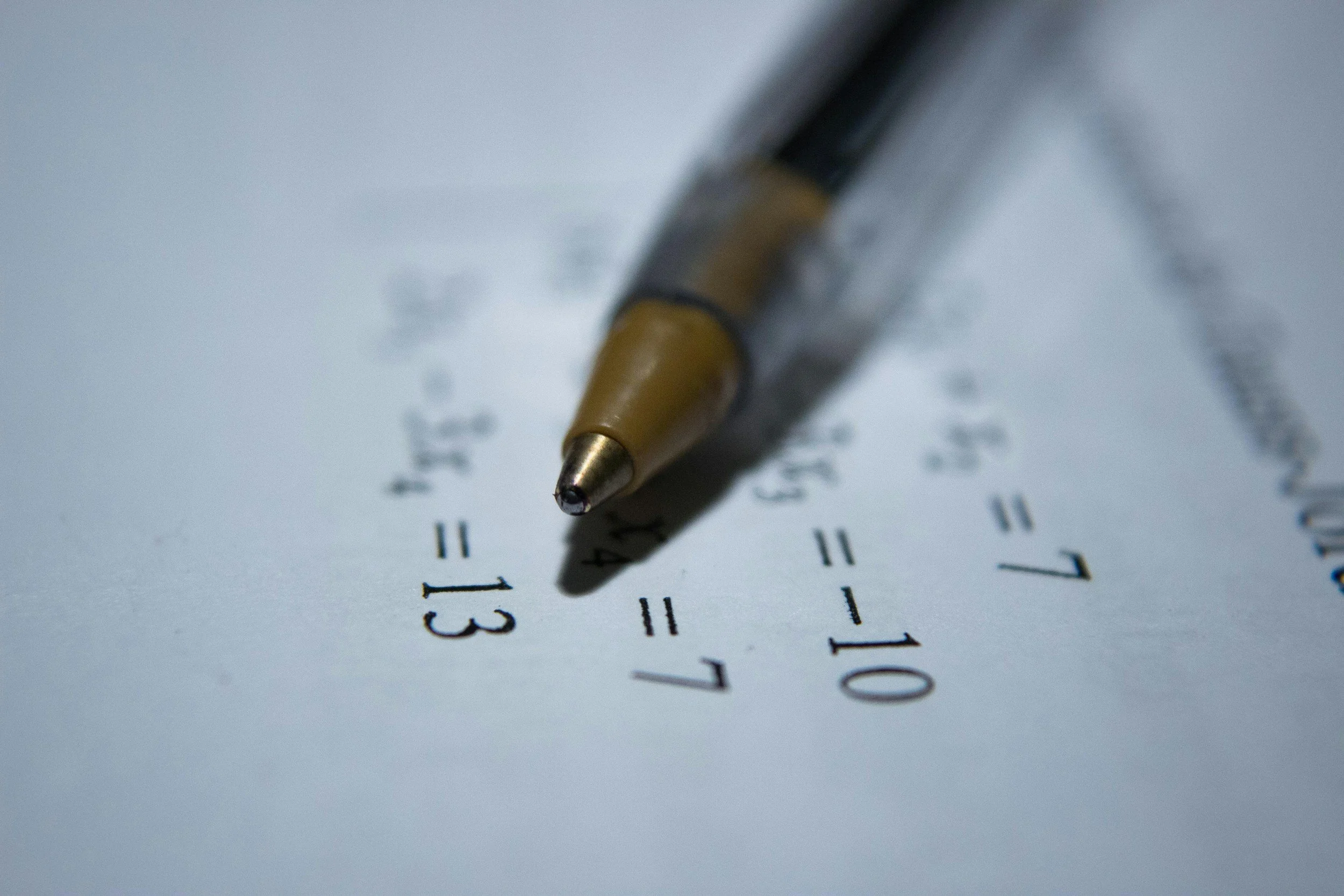
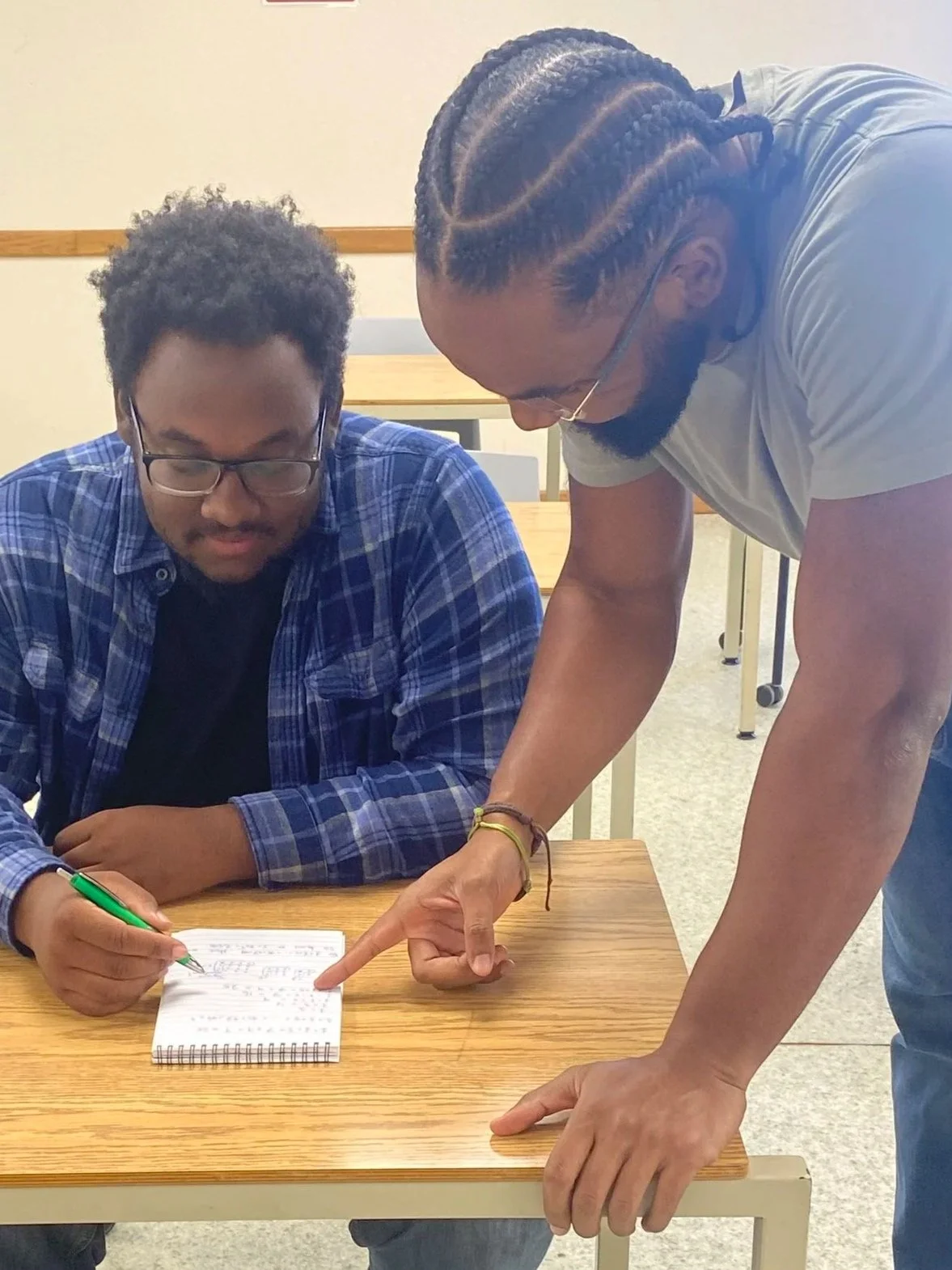
Personalized Tutoring
Personalized sessions for students from middle school to college and university. Prices start from $50. By the end of the session, students will confidently say “It’s that easy”.
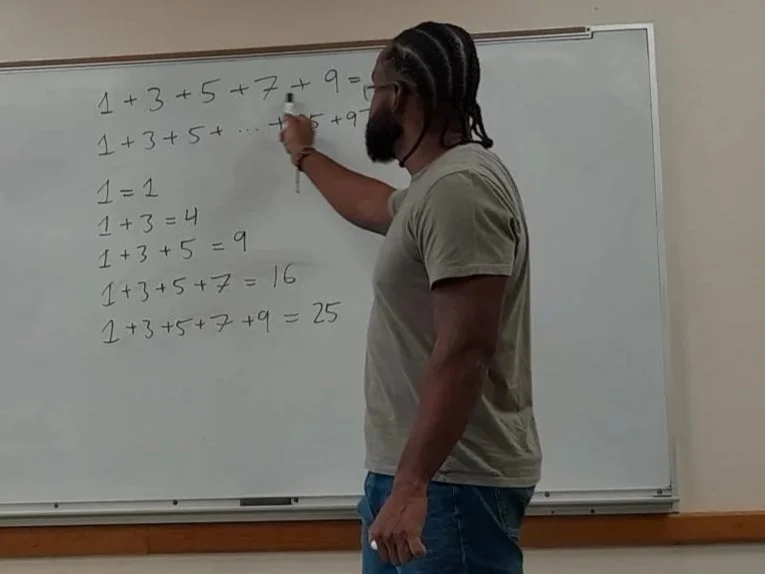
Public Lectures
Engaging talks on a variety of mathematical topics open to everyone. Has a certain mathematics topic always had your interest? Come learn about it in a public lecture.

Mathematics Olympiad
Problem-solving challenges to spark mathematical creativity and foster intellectual competition. How do you compare against the other great minds on the island?
Meet the Team
Dr. Kevin Minors, PhD
Dr. Minors is a Bermudian mathematician with a passion for solving hard problems, explaining complex ideas simply, and creating those ‘Aha!’ moments. He completed his undergraduate studies in mathematics at the University of Oxford and received his doctorate in mathematics from the University of Bath (his thesis is here). SCARS certificate is here. In his spare time, you will find him working out, dancing salsa, or overwatering his plants.
Student feedback: “one of the better tutors”, “Kevin is the only reason I may pass this module”, “This tutorial will single-handedly get me through this unit - thank you!”

In the News
Bermuda Joins International Math Olympiad
The Bermuda Mathematics Academy has successfully registered Bermuda as an observer country for the 2026 International Mathematics Olympiad [IMO] in Shanghai, China.
A spokesperson said, “This is a first for the country and will allow Bermuda to send a student team to participate in the 2027 IMO to compete with the top mathematical minds around the world. This is an incredible achievement for the Bermuda Mathematics Academy, local mathematicians, and the island as a whole.
Mathematics Olympiad To Be Held On Feb 28th
The Bermuda Mathematics Academy will host its first-ever Mathematics Olympiad, which “invites the island’s best and brightest problem solvers to tackle challenging mathematical problems that reward creativity, logical reasoning, and thinking outside the box.”
Mathematics Academy To Host Fractions Lecture
The Bermuda Mathematics Academy will host its second public lecture, “A Piece of Cake: Everything About Fractions,” on Saturday [Dec 6] from 3:00pm to 4:00pm.
A spokesperson said, “The Bermuda Mathematics Academy will be hosting its second public lecture ‘A Piece of Cake: Everything about Fractions’…
Mathematics Academy Launches Public Lecture
Dr. Kevin Minors, founder of the Bermuda Mathematics Academy, will host the first public mathematics lecture, Patterns, Primes, and Proofs, on Saturday, November 15.
Dr. Kevin Minors said, “I am thrilled to announce the launch of our first public mathematics lecture…
Problem of the Week
The first four terms of an arithmetic sequence are 2, a-b, 2a + b + 7, and a - 3b where an and b are constants. Find a and b.
-
1) Prove there are infinitely many primes.
2) Prove that the square root of 2 is irrational.
3) Below are some laws of addition and multiplication.
A1 (The Commutative Law for Addition): For any two numbers a and b, a + b = b + a
A2 (The Associative Law for Addition): For any three numbers a, b, and c, a + (b + c) = (a + b) + c
A3 (Additive Identity): For any number a, 0 + a = a
M1 (The Commutative Law for Multiplication): For any two numbers a and b, ab = ba
M2 (The Associative Law for Multiplication): For any three numbers a, b, and c, a(bc) = (ab)c
M3 (Multiplicative Identity): For any number a, 1a = a
D (Distributive Law): For any three numbers a, b, and c, (a + b)c = ac + bc
Using these rules explicitly, prove that 0 x 2 = 0, where 2 is defined as 2 = 1 +1
4) Below are some laws of addition and multiplication.
A1 (The Commutative Law for Addition): For any two numbers a and b, a + b = b + a
A2 (The Associative Law for Addition): For any three numbers a, b, and c, a + (b + c) = (a + b) + c
A3 (Additive Identity): For any number a, 0 + a = a
M1 (The Commutative Law for Multiplication): For any two numbers a and b, ab = ba
M2 (The Associative Law for Multiplication): For any three numbers a, b, and c, a(bc) = (ab)c
M3 (Multiplicative Identity): For any number a, 1a = a
D (Distributive Law): For any three numbers a, b, and c, (a + b)c = ac + bc
Using these rules explicitly, prove that 0 × 0 = 0
5) Below are some laws of addition and multiplication.
A1 (The Commutative Law for Addition): For any two numbers a and b, a + b = b + a
A2 (The Associative Law for Addition): For any three numbers a, b, and c, a + (b + c) = (a + b) + c
A3 (Additive Identity): For any number a, 0 + a = a
M1 (The Commutative Law for Multiplication): For any two numbers a and b, ab = ba
M2 (The Associative Law for Multiplication): For any three numbers a, b, and c, a(bc) = (ab)c
M3 (Multiplicative Identity): For any number a, 1a = a
D (Distributive Law): For any three numbers a, b, and c, (a + b)c = ac + bc
Using these rules explicitly, prove that -1 x -1 = 1 where -1 is defined as the number such that -1 + 1 = 0
-
1) Prove there are infinitely many primes.
Assume for contradiction that there are finitely many primes. Let the primes be 2, 3, 5, …, P for some largest prime P.
Consider the number N = 2 × 3 × 5 x … x P + 1. Either N is a prime or a composite number.
If N is prime, then N must be in the list of primes 2, 3, 5,…,P but N is clearly bigger than P. This is a contradiction.
If N is a composite number, then N must be divisible by a prime in the list 2, 3, 5, …, P. On inspection, each prime leaves a remainder of 1 when dividing into N. This is a contradiction.
Hence, by contradiction, there are infinitely many prime numbers.
2) Prove that the square root of 2 is irrational.
Assume for contradiction that the square root of 2 is rational. Then, it can be expressed as sqrt(2) = A/B where A and B have no common factors. The fraction is simplified as far as possible.
Squaring both sides gives 2 = A²/B² and multiplying both sides by B² gives A² = 2B².
A² is even so A is even (proof of this left to reader). We can write A as A = 2k for some integer k. Then, A² = 4k².
Substituting into equation with B gives 4k² = A² = 2B² so B² = 2k². B² is even and so B is also even. Hence, A and B are both even so have a common factor of 2. This is a contradiction.
Hence, the square root of 2 is irrational.
3) Below are some laws of addition and multiplication.
A1 (The Commutative Law for Addition): For any two numbers a and b, a + b = b + a
A2 (The Associative Law for Addition): For any three numbers a, b, and c, a + (b + c) = (a + b) + c
A3 (Additive Identity): For any number a, 0 + a = a
M1 (The Commutative Law for Multiplication): For any two numbers a and b, ab = ba
M2 (The Associative Law for Multiplication): For any three numbers a, b, and c, a(bc) = (ab)c
M3 (Multiplicative Identity): For any number a, 1a = a
D (Distributive Law): For any three numbers a, b, and c, (a + b)c = ac + bc
Using these rules explicitly, prove that 0 x 2 = 0, where 2 is defined as 2 = 1 +1
0 × 2 = 0 x (1 + 1) by definition
= (1 + 1) x 0 by M1
= 1 × 0 + 1 × 0 by D
= 0 + 1 × 0 by M3
= 0 + 0 by M3
= 0 by A3
4) Below are some laws of addition and multiplication.
A1 (The Commutative Law for Addition): For any two numbers a and b, a + b = b + a
A2 (The Associative Law for Addition): For any three numbers a, b, and c, a + (b + c) = (a + b) + c
A3 (Additive Identity): For any number a, 0 + a = a
M1 (The Commutative Law for Multiplication): For any two numbers a and b, ab = ba
M2 (The Associative Law for Multiplication): For any three numbers a, b, and c, a(bc) = (ab)c
M3 (Multiplicative Identity): For any number a, 1a = a
D (Distributive Law): For any three numbers a, b, and c, (a + b)c = ac + bc
Using these rules explicitly, prove that 0 × 0 = 0
0 x 0 = 0 + 0 x 0 by A3
= 0 x 0 + 0 by A1
= 0 x 0 + 1 x 0 by M3
= ( 0 + 1 ) x 0 by D
= 1 x 0 by A3
= 0 by M3
5) Below are some laws of addition and multiplication.
A1 (The Commutative Law for Addition): For any two numbers a and b, a + b = b + a
A2 (The Associative Law for Addition): For any three numbers a, b, and c, a + (b + c) = (a + b) + c
A3 (Additive Identity): For any number a, 0 + a = a
M1 (The Commutative Law for Multiplication): For any two numbers a and b, ab = ba
M2 (The Associative Law for Multiplication): For any three numbers a, b, and c, a(bc) = (ab)c
M3 (Multiplicative Identity): For any number a, 1a = a
D (Distributive Law): For any three numbers a, b, and c, (a + b)c = ac + bc
Using these rules explicitly, prove that -1 x -1 = 1 where -1 is the number such that -1 + 1 = 0
-1 x -1 = 0 + -1 x -1, by A3
= -1 + 1 + -1 x -1, by definition of -1
= -1 + -1 x -1 + 1, by A1
= 1 x -1 + -1 x -1 + 1, by M3
= (1 + (-1) ) x -1 + 1, by D
=( (-1) + 1) x -1 + 1, by A1
= 0 x -1 + 1, by definition of -1
= 0 + 1, by previous problem of the week
= 1, by A3
Personalized Tutoring
Upcoming Public Lecture
There are no public lectures currently scheduled. Please check back soon!
-
Patterns, Primes, and Proofs: The Building Blocks of Mathematics
A Piece of Cake: Everything about Fractions
Upcoming Mathematics Olympiads
There are no mathematics olympiads currently scheduled. Please check back soon!
-
Spring Olympiad - 27 May 2026
Winter Olympiad - 28 Feb 2026
Contact us
hello@maths.bm